
India needs to be technologically and militarily prepared to defend itself from both Pakistan and China, alerts Ramesh Menon.

India expects partners to understand its policy of 'zero tolerance' against terrorism, and it will never countenance 'perpetrators of evil' being put on par with its victims, External Affairs Minister S Jaishankar said on Saturday during extensive talks with his British counterpart David Lammy.

Suggests ban in 20 states; operators fear price surge, European monopoly.

The defence ministry has eased rules for rolling out mobile towers, optical fibre and other telecom infrastructure gears in its area in line with the "Right of Way (RoW)" Rules notified by the Telecom Ministry in 2016. A copy of the new rules uploaded on Gati Shakti Portal on Thursday replaces "shared communication tower and other telecom infrastructure to extend communication network in military station/cantonments" issued in February 2018. As per the new rule, "... any application received for installation of under/overground telecom infrastructure of defence land shall henceforth be processed in accordance with the Indian Telegraph Right of Way Rules 2016 (as amended from time to time) formulated by the Department of Telecommunications" with some additional conditions.

TIA said it is very concerned over the discriminatory policy proposals that India is contemplating.


Amid the ongoing global tariff war, Reserve Bank Governor Sanjay Malhotra on Wednesday said he is more worried about its impact on growth than inflation. Speaking to the media after presentation of the first bi-monthly monetary policy for the current financial year, Malhotra said, RBI has reduced the growth forecast for 2025-26 by 20 basis points to 6.5 per cent.

Till now the telecom companies can share only passive infrastructure such as towers. In active infrastructure the players would be able to share antenna and mobile exchanges among others.
The telecom industry is divided over the policies of former Communications Minister Dayanadhi Maran, who resigned on Sunday.

Most brokerages are betting that the new government will shift to a policy focussing on boosting rural incomes and consumption since that has clearly been a pain point.
Putting at rest the controversy over issuance of new telecom licenses on 575 applications, the government on Monday said in the Lok Sabha that these would be issued as per the existing policy which does not put any restriction on the number of operators.

India's biggest telecom players, Bharti Airtel and Reliance Industries-backed Jio Platforms, will soon bring billionaire Elon Musk-led SpaceX's Starlink satellite services to India. According to analysts, the move could boost India's tele density, especially in the rural areas, and may be an opportunity for investors to add the two stocks on dips for long-term gains

After a two year run-in with controversies, telecom sector now looks stable and seems back on its feet with initial investment proposal of over Rs 11,000 crore (Rs 110 billion) received in 2013.

The US continues to be concerned about the proposed 'Toys and Toy Products (Compulsory Registration) Order' being considered by the government of India.

Indian stock markets have experienced some ups and downs in the first half of 2025. However, both the Nifty 50 and Sensex saw steady gains, supported by a healthy economy and better corporate earnings. In this article, we will look at the detailed performance of these key indices and explore the sectors that drove the market rally.

Prime Minister Manmohan Singh on Thursday said a strong domestic manufacturing base in electronics and telecommunications will mitigate burden of growing imports for the sector.
The petition filed by a host of GSM operators along with COAI also sought quashing of department of telecommunication's decision, dated October 19, to allow enhanced subscriber-linked criterion for spectrum allocation. They also sought non-implementation of these decisions terming them unfair, unjust, illegal, arbitrary and violative of level-playing field and principles of natural justice.
The Supreme Court on Thursday directed the Central Bureau of Investigation and the Enforcement Directorate to carry out investigations into the 2G spectrum scam by bringing in its ambit the telecom policy since 2001. A bench comprising justices G S Singhvi and A K Ganguly made it clear that the emphasis of the investigation would be to determine the loss of money to the public exchequer and a progress report on the probe has to be filed by the CBI and the ED in a sealed cover

In a setback to telecom service providers, the Supreme Court on Thursday allowed the Centre's plea to recover adjusted gross revenue (AGR) of about Rs 92,000 crore from them.

While India has become the largest data generating nation, and hosts more than 152 data centres, it is fed by only 18 undersea cables.

Former Central Bureau of Investigation joint director Amit Kumar, who is now posted as Chhattisgarh police ADG, led the probe into the coal scam that resulted in convictions in a number of cases.

India's policy for agriculture trade must move commodity-by-commodity to gain maximum benefits as US President Donald Trump's 26 per cent tariff on exports from the country take effect, said agriculture economist Ashok Gulati in a recent policy paper.

The Supreme Court recently quashed a rule that mandated telecom operators to compensate consumers.

A Rs 23,000-crore production-linked incentive (PLI) scheme for electronic components may boost margins and enable a broader product mix.

The government is expected to outline a policy framework for artificial intelligence (AI) at the annual India Mobile Congress (IMC) 2024, beginning Tuesday, officials said. Apart from industry participation, the four-day event will feature booths from over 15 ministries showcasing how AI is being integrated into their departments.
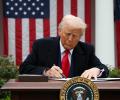
On India, the chart showed that the country charged 52 per cent tariffs on the US "including currency manipulation and trade barriers," and America will now charge India "discounted reciprocal tariffs" of 26 per cent.

Benchmark BSE Sensex tanked 824 points to settle at a fresh seven-month low on Monday following heavy selling in IT and oil & gas shares amid weak global trends. The 30-share BSE barometer plunged by 824.29 points or 1.08 per cent to close at 75,366.17 with 23 of its constituents ending lower and seven with gains. During the day the index moved between a high of 75,925.72 and a low of 75,267.59.
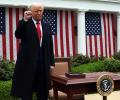
Here is a list of Q & As to explain these issues and implications of the US move.
Fitch Ratings on Monday said India's steady GDP growth outlook, improved banking sector's financial health and expected interest-rate cuts in 2025 will support credit access for corporates in FY26.

Goods from sectors, including agriculture, precious stones, chemicals, pharma, medical devices, electricals, and machinery may get impacted if the US will go ahead with imposing reciprocal tariffs on Indian products, according to experts. They said that these sectors could face additional customs duties from the Trump administration because of the high tariff differential or gap, which is the difference between the import duties imposed by the US and India on a product.
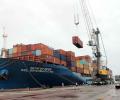
Industry associations and companies in the United States, including the US Chamber of Commerce, Coalition of Services Industries and the iconic bike company Harley Davidson have called on the Donald Trump dispensation to push India to reduce tariffs, non-tariffs, and regulatory barriers to boost American exports.

Internet major Google has appointed former joint secretary at Niti Aayog Archana Gulati as head of public policy in India. A Google spokesperson confirmed the appointment. Messages sent to Gulati elicited no immediate reply. Gulati was looking after digital communications policy matters at the government think tank and took voluntary retirement in April last year.

'Tinkering will not do. Merely staggering spectrum dues comes nowhere near solving the problem,' cautions Rahul Khullar.
The 2G judgment and Trai spectrum pricing have led to a policy that makes sense for only one survivor.
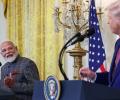
Of Trump's reciprocal tariffs and trade deals
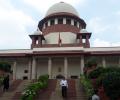
The Enforcement Directorate (ED) faced criticism from the Supreme Court for filing a "half-baked" reply in a bail matter related to the Chhattisgarh liquor scam. The court expressed dissatisfaction with the situation, questioning the accountability of the ED and its advocate-on-record. The ED's additional solicitor general, S.V. Raju, attributed the error to a miscommunication and assured the court that a departmental inquiry would be initiated.
